Small Business CPA & Accounting Services in Raleigh, NC

Since 1971, Stancil has provided accounting services to small businesses throughout the Raleigh area.

Raleigh CPA Services for your Small Business

Since 1971, Stancil CPA has provided tax, audit, and accounting services to businesses and families across the Raleigh area. Our team of more than 30 professionals and seven partners works directly with clients on the financial tasks that keep a business organized and compliant throughout the year, including accounting and bookkeeping, financial statement preparation, and business tax preparation.

If you're looking to outsource your bookkeeping and tax preparation, contact our Raleigh CPA firm at (919) 872-1260 or fill out the form below for more information about our accounting services.

stancil-office-front
Stancil CPA professionals meeting to discuss tax and financial strategies.

Real Concerns We Help People Solve Every Day

Running a business involves unique challenges, but you’re not alone. We regularly hear from business owners who share these common concerns:

  • How can I optimize my cash flow while staying compliant with tax regulations?
  • What strategies can I use to manage unpredictable income more effectively?
  • How do I ensure my bookkeeping is accurate and up-to-date throughout the year?
  • What are the best practices for leveraging QuickBooks in my business?

Growing, facing a lender-required review, or planning a transition? See our services for privately held companies.

What Working With Us Looks Like

Circular icon displaying the number one.
Discover

We start with where things actually stand: your books, your entity type, your last return, and what's been eating your time. No judgment about the shoebox.

Circular icon displaying the number two.
Organize

We get your records current and accurate, resolve any open notices, and make sure your chart of accounts reflects how you actually run the business.

Circular icon displaying the number three.
Establish a Rhythm

We set a monthly or quarterly cadence for closing the books, plus a calendar of filing deadlines so nothing arrives as a surprise.

Circular icon displaying the number four.
Stay Ahead

We check in through the year on estimates, owner compensation, and decisions with tax consequences, rather than reviewing everything after the fact in March.

A Local Firm for Local Business Owners

Wake County adds thousands of new businesses every year, and most of them are run by owners handling payroll, invoicing, and record keeping alongside everything else. Stancil has worked with small businesses across Raleigh, Durham, Chapel Hill, and Cary since 1971, long enough to have seen a lot of them grow from a single owner to a full team. Our office is on Windy Hill Drive in Raleigh's 27609 area, so when a payroll notice arrives or a bookkeeping question can't wait, you can call someone who will pick up. You get direct access to a CPA who knows your business, backed by a firm large enough to handle the tax, audit, and advisory work that comes later.

Downtown Raleigh, North Carolina skyline, where Stancil CPA serves small businesses
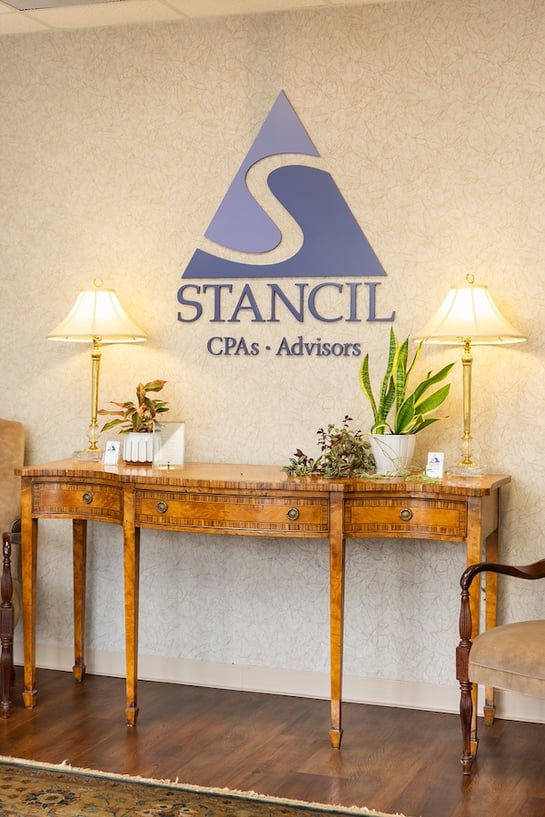
Reception area at Stancil CPA featuring the firm's logo.

Not Sure What You're Missing? Start Here.

Most business owners don't call a CPA because they've identified a specific problem. They call because something feels off and they can't name it. These are the signs we hear most often.

  • You can't tell what you made last month without asking someone. Your bank balance tells you what's there today. It doesn't tell you whether the business was profitable, which jobs or clients earned their keep, or whether last month was better than the one before it.

  • Your books and your bank statements don't agree. If accounts haven't been reconciled in months, the numbers in your accounting software are an estimate. Every decision you make from them inherits that error, including the tax return filed from them.

  • Last year's numbers changed after you filed. Prior periods should be closed and stay closed. When they shift, it usually means adjustments are being posted to the wrong dates, and it makes year-over-year comparison meaningless.

  • Personal and business spending run through the same account. It's common early on and it gets expensive later. It complicates deductions, muddies owner compensation, weakens the legal separation your entity is supposed to provide, and turns tax prep into an archaeology project.

  • You find out what you owe in March. By then most of the decisions that affect the number have already been made. Estimated payments, equipment purchases, retirement contributions, and compensation decisions all had to happen before year end to matter.

  • Nobody is looking at the numbers between filings. If the only time anyone reviews your financials is at tax time, you're getting compliance without guidance. The return tells you what happened. It doesn't tell you what to do next.

If more than one of these sounds familiar, the issue usually isn't effort. It's that the work is split across roles that were never clearly defined.


Bookkeeper, Controller, or CPA: Who Does What

These three roles get used interchangeably, and that's where the gaps come from. Each one handles a different layer of the same financial picture.


Bookkeeper
Controller
CPA
Primary role
Records what happened Manages the process and the reporting Advises on decisions and handles tax
Typical work
Transaction entry, categorization, bank and credit card reconciliation, accounts payable and receivable, payroll processing Monthly close, financial statement preparation, cash flow management, budgeting, internal controls, oversight of the bookkeeper Tax planning and preparation, entity structure, owner compensation, assurance and financial statement services, business advisory
Question they answer
What did we spend on materials in April? Are we going to be able to make payroll in November? Should I take this as salary or a distribution?
When you need one
As soon as there's regular activity in the business When the volume outgrows a monthly review, or when you need reliable reporting for a lender or a partner From the beginning for tax, and increasingly for planning as the business grows
Cadence
Ongoing, daily to weekly Monthly Year-round planning, with filing deadlines

Most small businesses don't need all three as separate hires, and many don't need a full-time controller at any point. What matters is that the work at each layer is actually getting done by someone. The most common gap we see isn't a missing bookkeeper. It's a business with reasonably good records and no one interpreting them, so the owner has data without direction.

At Stancil, we can handle any of these layers. That might mean taking over the bookkeeping entirely, reviewing the work of a bookkeeper you already have, or providing the tax and advisory layer while your existing team handles the day-to-day. The right arrangement depends on what's already working.

Industries We Serve

Business Owner Frequently Asked Questions

Ready to Get Started?

Book your free consultation now.