WIP Schedule and Surety Bonding for Contractors
Learn how a WIP schedule supports surety bonding, project oversight, cost-to-complete estimates, and separate tax review under IRC §460.
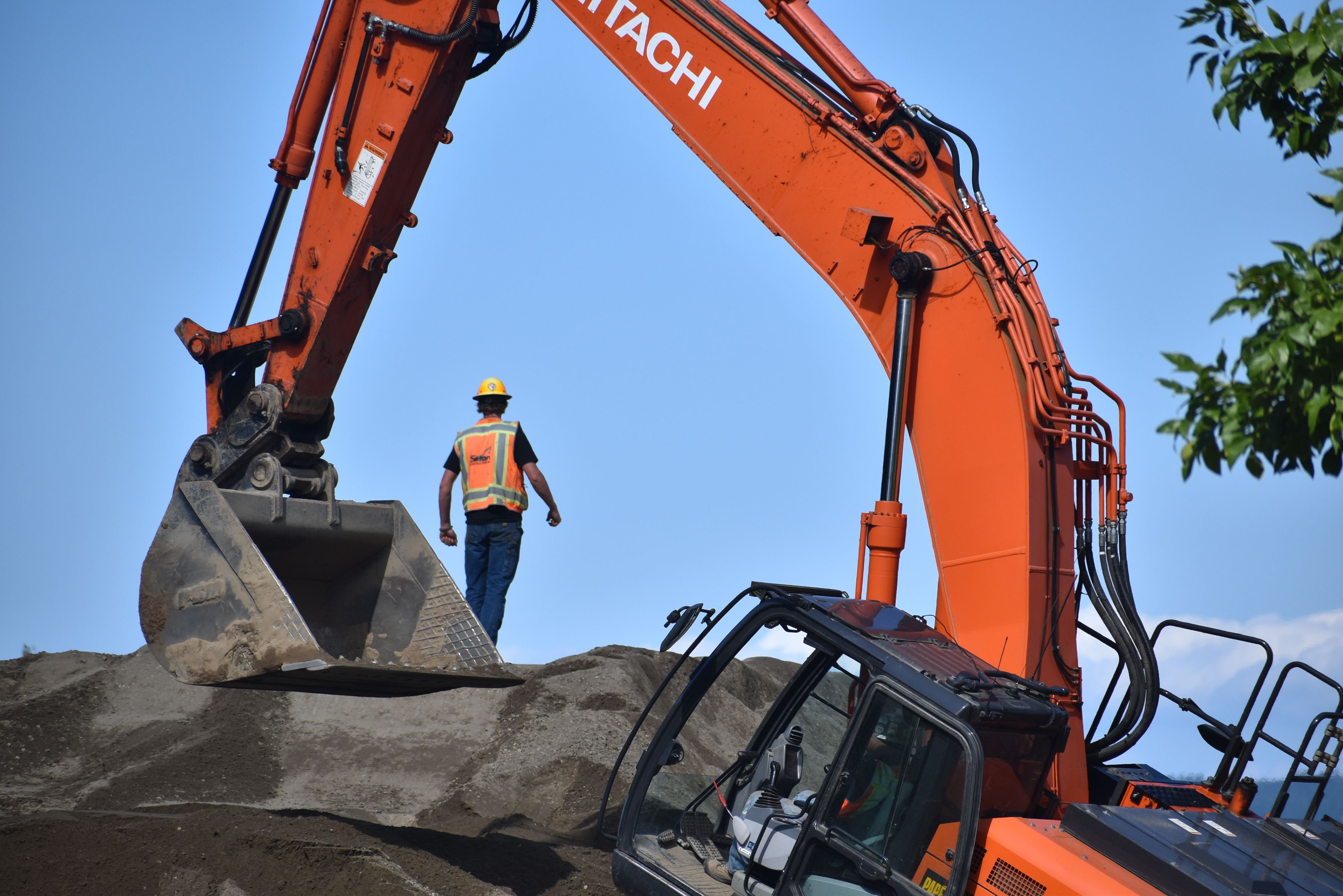
When a construction company purchases a truck, excavator, skid steer, crane, trailer, or other major piece of equipment, the purchase may create a significant tax deduction. Two of the most common options are the Section 179 deduction and bonus depreciation.
The important point is that contractors often do not have to choose only one. Section 179 generally applies first, bonus depreciation applies next, and regular depreciation applies to any remaining cost. In many cases, a business may use both methods during the same year.
Section 179 allows a business to deduct all or part of the cost of qualifying equipment in the year the equipment is placed in service instead of spreading the deduction over several years.
Construction equipment that may qualify includes many types of:
The equipment generally must be purchased for use in the active conduct of the business. Equipment acquired by gift, inheritance, or from certain related parties generally does not qualify. If equipment is used for both business and personal purposes, it generally must be used more than 50% for business to qualify for Section 179.
For tax years beginning in 2026:
The $4,090,000 phase-out test measures the total cost of qualifying Section 179 property placed in service during the year—not just the cost of one excavator or the amount of revenue from a particular construction project. Section 179 limits also generally apply to the taxpayer as a whole rather than separately to each business.
For certain heavy SUVs weighing more than 6,000 pounds but not more than 14,000 pounds, the 2026 Section 179 deduction limit is $32,000. Different rules may apply to other trucks and vehicles, including passenger automobile limits and listed-property rules.
Bonus depreciation allows a business to deduct a percentage of qualifying equipment cost in the first year the equipment is placed in service. Unlike Section 179, bonus depreciation generally does not have an annual dollar cap or an active-business-income limit.
For qualifying property acquired and placed in service after January 19, 2025, the bonus depreciation rate is generally 100%. Qualifying property may include tangible property depreciated under MACRS with a recovery period of 20 years or less. Certain used property may qualify if the acquisition and related-party requirements are satisfied.
A contractor generally cannot claim bonus depreciation on property required to use the Alternative Depreciation System, including certain property used predominantly outside the United States and listed property used 50% or less for qualified business purposes. Property placed in service and disposed of in the same tax year is also generally excluded.
Equipment acquired before January 20, 2025, may be subject to the older phase-down schedule. For example, qualifying property acquired before that date and placed in service during 2026 may generally receive a 20% bonus depreciation rate. A binding contract entered into before January 20, 2025, can also affect the applicable rate. Acquisition and contract dates should be reviewed carefully.
|
Feature |
Section 179 |
Bonus depreciation |
|
Annual dollar limit |
$2,560,000 for 2026 |
Generally no annual dollar cap |
|
Income limitation |
Limited by active business taxable income |
No active business income limitation |
|
Eligible property |
Certain purchased business property |
Certain new or used qualifying property |
|
Business-use requirement |
Generally more than 50% business use for mixed-use property |
Listed property used 50% or less generally cannot qualify |
|
Selection flexibility |
Business can choose the amount deducted for particular items |
Generally applies by property class unless an election out is made |
|
Order of application |
Applies first |
Applies after Section 179 and before regular MACRS |
|
Carry-forward |
Allowed for amounts limited by business income |
No bonus depreciation carry-forward is needed when the entire remaining basis is deducted |
|
Recapture risk |
Possible if business use later falls to 50% or less |
Gain may be recaptured as ordinary income when qualifying property is sold |
The Section 179 election can be useful when an owner wants to choose which equipment receives an immediate deduction or wants to deduct only part of an asset’s cost. Bonus depreciation may be more useful when the company wants to deduct a large amount of equipment cost even though current business income is relatively low.
Assume the following:
The company may elect to deduct the full $800,000 under Section 179 because:
The estimated current-year tax reduction would be:
$800,000 deduction × 30% tax rate = $240,000
If the excavator qualifies for 100% bonus depreciation, the company could deduct the entire $800,000 in the year it is placed in service.
The estimated current-year tax reduction would also be:
$800,000 deduction × 30% tax rate = $240,000
The company could also use Section 179 first and bonus depreciation on any remaining basis. In this example, Section 179 could cover the entire $800,000 cost, leaving no remaining basis for bonus depreciation.
The total first-year deduction would still be:
$800,000
The estimated tax reduction would still be approximately:
$240,000
This illustrates an important point: when the equipment qualifies, the business has enough taxable income for Section 179, and the owner intends to deduct the full cost immediately, Section 179 and bonus depreciation may produce the same first-year deduction.
Now assume the same excavator costs $800,000, but the company has only $300,000 of active business taxable income before Section 179.
Section 179 would generally be limited to $300,000 for the current year. The remaining $500,000 could be carried forward, subject to future limitations.
If the company claims only Section 179, its current-year deduction may look like this:
If the company claims Section 179 and then bonus depreciation:
In this example, bonus depreciation provides a larger current-year deduction because it is not limited by the company’s active business taxable income. The difference between the $240,000 and $90,000 tax reductions is $150,000 in estimated current-year tax reduction under the assumed 30% rate.
The actual tax result depends on the company’s tax rate, entity structure, other deductions, credits, business losses, and whether the equipment qualifies.
Before purchasing equipment, construction business owners should review:
Construction equipment must also be classified correctly for regular MACRS depreciation if the full cost is not deducted immediately. The recovery period may depend on the equipment’s type, the construction activity, and whether the business uses the General Depreciation System or Alternative Depreciation System. For example, construction assets may fall into different five-year, seven-year, or other property classifications depending on the facts.
A $100,000 deduction does not automatically reduce taxes by $100,000. The tax reduction depends on the applicable federal, state, and local tax rates and other limitations.
Buying equipment in December does not necessarily create a depreciation deduction if the equipment is not ready and available for use until the following year.
Vehicles and other listed property require careful records of business and personal use. If qualified business use falls to 50% or less, prior accelerated deductions may be subject to recapture or other adjustments.
Land does not qualify for depreciation, and some building components must be depreciated over a longer period. Equipment, tools, machinery, and building improvements should be reviewed separately rather than treated as one large purchase.
The best tax result may depend on when equipment is ordered, delivered, installed, and placed in service. A year-end purchase may not create a current-year deduction if the equipment is not ready for use.
For many contractors, Section 179 and bonus depreciation can both provide substantial first-year deductions for qualifying equipment. Section 179 offers more control but is limited by annual purchase and business-income rules. Bonus depreciation generally offers more flexibility when a company has significant equipment purchases but limited current-year taxable income.
Not sure which method fits your business? Schedule a tax planning consultation with Stancil before your next equipment purchase. A proactive review can help you evaluate the purchase date, placed-in-service timing, business-use percentage, and available depreciation options.

Learn how a WIP schedule supports surety bonding, project oversight, cost-to-complete estimates, and separate tax review under IRC §460.

Received a CP2000 notice? Learn how to compare IRS records, respond by the deadline, dispute errors, and seek help from a Raleigh CPA.

Learn what business owners should know about S Corp tax planning, including reasonable compensation, salary vs. distributions, and when to revisit...